
What Is a Duress Alert — And Does Your Organization Need One?

A fire alarm is obvious — that's the point. But when the threat is a person standing right in front of your employee, an obvious alarm can make things worse.
That's the problem a duress alert solves. It lets an employee call for help silently, without the aggressor knowing. No alarm sounds, no lights flash — just an immediate, discreet signal to the right people that something is wrong.
Here's a clear look at what duress alerts are, how they work, who needs them, and what US law now requires.
Quick Answer:
A duress alert is a silent emergency signal triggered by an employee who is in danger but cannot safely call for help openly. It notifies security, management, or colleagues without alerting the person causing the threat. Also called a panic alert, silent alarm, or duress button.
Over 20 years of experience in alerting
IT alerting, fire alerts, alerting company first responders and much more. ISO-certified server infrastructure. Used by SMEs, corporations, authorities and public organizations.
What Is a Duress Alert?
A duress alert is a silent distress signal — and one of the most important capabilities of a modern emergency notification system. When an employee triggers it, a notification is immediately sent to designated recipients — security, management, or colleagues — without making any sound or visible indication at the point of activation.
The key word is silent. Unlike a fire alarm, which is designed to be heard by everyone, a duress alert is designed to be invisible to anyone except the people who need to respond.
Common situations where a duress alert is used:
- A bank teller being threatened by a customer during a transaction
- A receptionist facing an aggressive visitor at the front desk
- A healthcare worker alone with a violent or agitated patient
- A retail employee confronted by a shoplifter turning threatening
- A social worker conducting a home visit in an unsafe situation
- A hotel housekeeper working alone in a guest room
In all of these workplace violence situations, the employee cannot safely announce that they are calling for help. The duress alert lets them do it anyway — instantly and discreetly.
Not sure what an emergency notification system is or how it differs from a mass notification system? Here's a clear breakdown.
How Does a Duress Alert Work?
The mechanics vary by system, but the core workflow is the same:
- Employee triggers the alert — via a dedicated panic button, a keyboard shortcut on their desktop, a mobile app, or a wearable device. The trigger is fast and requires minimal movement.
- Alert is sent instantly — the system notifies the designated recipients immediately. No delay, no manual call required.
- Recipients are mobilized — security, management, or colleagues receive the alert on their phones, desktop apps, or dedicated devices, and respond.
- Incident is documented — a good system logs the alert with a timestamp, location, and response confirmation — critical for compliance and incident review.
safeREACH example
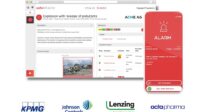
With safeREACH, a front desk employee can trigger a silent duress alert directly from their desktop app with a single click — or from a physical alert button mounted at the workstation. The alert reaches designated colleagues and security instantly, with confirmation that it has been received.
1.666 alerts per second
safeREACH as your powerful emergency notification system with up to 100.000 alerts per minute. Successfully used by multinational corporations, medium-sized companies and public authorities. ISO-certified server infrastructure.
US Legislation: Duress Alerts Are Becoming Mandatory
This is no longer just a best practice. Across the United States, state and city laws are making duress alerts — or equivalent panic button systems — a legal requirement for a growing number of employers.
| State / City | Key requirement | Sector | Effective |
|---|---|---|---|
| New York | Retail Worker Safety Act — panic buttons required for employers with 500+ employees nationwide | Retail | Jan 1, 2027 |
| New York City | Safe Hotels Act — panic buttons for all hotels with 50+ rooms | Hospitality | Nov 2024 |
| California | AB 1763 — panic button devices for applicable employers | Multiple | Jan 1, 2024 |
| Washington State | HB 1524 — panic buttons for isolated employees across multiple industries | Multiple | Jan 1, 2026 |
| Illinois | Hotel and Casino Safety Act (SB 75) — emergency notification devices for lone hospitality workers | Hospitality | Jul 2020 |
| New Jersey | Alyssa's Law — silent panic alarms linked to law enforcement in all public schools | Education | In effect |
| Florida / Texas / NY | Alyssa's Law enacted — silent panic alarm systems in public schools | Education | In effect |
The trend is clear: what started in hospitality is expanding into retail, healthcare, education, and beyond. OSHA is also working on a federal workplace violence prevention standard for healthcare and social assistance.
Important compliance note: This table reflects the state of legislation as of early 2026. Laws are changing rapidly. Consult legal counsel to determine the specific requirements for your state, industry, and organization size. safeREACH can support your compliance efforts but does not constitute legal compliance advice.

Who Needs a Duress Alert System?
Any organization where employees regularly interact with members of the public — or work in isolated situations — should have a duress alert capability. This includes:
- Banks, credit unions, and financial services — tellers, advisors, and customer-facing staff
- Healthcare facilities — nurses, receptionists, social workers, home care workers
- Retail businesses — especially those open late, handling cash, or with high foot traffic
- Hotels and hospitality — housekeepers, front desk staff, lone workers
- Schools and universities — teachers, administrators, security staff
- Government offices and public agencies — anyone in public-facing roles
- Corporate offices — reception areas, open lobbies, public access points
The common thread: employees who could find themselves in a threatening situation where calling for help openly is not an option.
Duress Alert vs. Panic Button — Is There a Difference?
The terms are often used interchangeably, and in most contexts they mean the same thing: a fast, silent way for an employee to signal that they need immediate help.
The distinction, when it exists, is usually about the trigger method. A panic button typically refers to a physical button — mounted at a workstation, worn as a device, or integrated into a phone. A duress alert can be triggered by any method: a physical button, a desktop app shortcut, a mobile app, or a keyboard combination.
What matters is the outcome: an immediate, silent notification to the right people that someone needs help right now.
What to Look for in a Duress Alert System
Not all solutions are equal. When evaluating options for your organization, look for:
- desktop app, mobile app, physical button — so employees can alert from wherever they are: Multiple trigger options
- the alert must reach recipients in seconds, not minutes: Instant delivery
- recipients should confirm they have received and are responding to the alert: Confirmation receipts
- the trigger must be completely silent and discreet: No sound at the point of activation
- who gets notified, in what order, and what happens if no one responds: Predefined response workflows
- automatic logging of every alert with timestamp and response status — essential for compliance: Incident documentation
- the trigger must work with one click or one press, even for someone who is panicking: Easy to use under stress
Frequently Asked Questions
A duress alert is a silent emergency signal that allows an employee to call for help without alerting the person causing the threat. It is triggered via a button, app, or keyboard shortcut, and instantly notifies designated responders. Also known as a panic alert, silent alarm, or duress button.
The terms are largely interchangeable. A panic button usually refers to a physical trigger device; a duress alert can be triggered by a physical button, a desktop app, or a mobile app. Both serve the same purpose: enabling an employee to signal distress silently and instantly.
In a growing number of states and sectors, yes. New York's Retail Worker Safety Act requires panic buttons for large retail employers by January 2027. California, Washington State, Illinois, and several cities have enacted requirements for hospitality and other sectors. Alyssa's Law mandates silent panic alarms in public schools in multiple states. Federal legislation for healthcare is also in development. The trend is toward broader requirements across more industries.
Any industry where employees interact with the public or work in isolated situations: banking and financial services, healthcare, retail, hospitality, education, government offices, and corporate environments with public-facing reception areas.
safeREACH enables organizations to set up silent duress alerts that can be triggered via the desktop app, mobile app, or a physical alert button. When triggered, designated colleagues or security staff are notified instantly with confirmation receipts and full incident logging. safeREACH can support organizations working to meet workplace violence prevention requirements — consult your legal advisor to confirm compliance with specific state and sector regulations.
Need a duress alert system for your organization?
safeREACH lets employees trigger silent duress alerts from a desktop app, mobile app, or physical alert button — with instant notification and confirmation for security and management. Alert the right people in seconds.
Try safeREACH free for 14 days — no credit card required.