
Alerting for Industry & Manufacturing

Quickly reach the right people during disruptions, accidents and other critical incidents - across shifts, sites and areas of responsibility.










When every minute counts in manufacturing
Technical disruptions, workplace accidents and other critical incidents cannot always be prevented. But the response can be prepared.
In manufacturing companies, employees often work across different areas, shifts and locations. Who needs to be alerted depends on the incident: a technical disruption may require maintenance teams, an accident may require first responders, while a larger incident may also involve the crisis management team.
With safeREACH, companies can prepare different alerting workflows in advance and quickly reach the right people when an incident occurs.
Reach the right people faster
Instead of working through call lists or searching for the person responsible, you can launch the predefined alerting workflow for the specific incident.
Prepare for different types of incidents
Technical disruption, workplace accident, evacuation or crisis: different recipients and workflows can be defined for each situation.
Keep track of responses
See who has responded to an alert and whether additional people need to be notified.
Over 20 years of experience in alerting
IT alerting, fire alerts, alerting company first responders and much more. ISO-certified server infrastructure. Used by SMEs, corporations, authorities and public organizations.

Common alerting scenarios in industry and manufacturing
Technical disruptions and production downtime
If a machine, production system or other critical equipment fails, maintenance teams or on-call personnel need to be informed quickly. The sooner the right people respond, the sooner the cause can be investigated and the disruption resolved.
Workplace accidents and medical emergencies
In the event of a workplace accident, a fast response is essential. First responders, occupational medical staff or other designated personnel can be alerted and directed to the right location.
Fire and evacuation
In the event of a fire, hazardous material release or other immediate danger, employees, safety personnel, plant fire brigades or evacuation teams may need to be notified.
Predefined alerting workflows help ensure that the right people can be reached quickly without unnecessary delays.
▶︎ Evacuation
On-call alerting outside regular working hours
Disruptions can occur at night, on weekends or on public holidays. In these situations, the responsible on-call personnel need to be reached reliably.
Responses show whether someone has taken responsibility for the alert. If necessary, additional people can be notified.
Major operational disruptions and crisis situations
Not every incident remains limited to a single department or site. Major production outages, fires, cyberattacks or other critical situations may also require the involvement of crisis management teams, senior management or other key personnel.
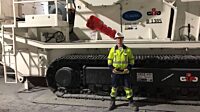
"ARGE H51 uses safeREACH as the crisis management tool for the construction of the world's longest underground railway link."
Florian Aelfers
Employee at ARGE H51, Brenner Base Tunnel
From incident to response
During a critical incident, there should be no need to first determine who needs to be notified and how.
With predefined alerting scenarios, recipients and workflows can be prepared in advance.
- Detect the incident: An alert can be triggered manually or initiated by an existing technical system.
- Start the alert: The predefined scenario for the specific situation is launched.
- Notify the responsible people: The designated recipients receive the alert through the predefined communication channels.
- Check responses: Responsible teams can see who has responded to the alert and whether additional people need to be notified.
This turns an unexpected incident into a predefined response process.
Connect technical systems with alerting
Many critical incidents in manufacturing environments are first detected by technical systems.
If an existing monitoring, control or other technical system detects a disruption, it can automatically trigger an alert through safeREACH.
This connects technical monitoring with organizational alerting: the existing system detects the incident, while safeREACH notifies the people who need to respond.
Reach the right people for each incident
Different incidents require different people. Depending on the situation and organization, alerts may need to reach:
- maintenance teams and technical on-call personnel
- shift and production managers
- workplace first responders and occupational medical staff
- plant fire brigades and safety personnel
- evacuation teams
- IT and information security
- crisis management teams
- senior management
- internal communications
- external service providers and specialists
With predefined alerting scenarios, you can determine in advance who should be notified for each type of incident.
This avoids having to decide who to contact only after an incident has already occurred.
Alert across shifts, sites and areas of responsibility
As manufacturing companies grow, alerting processes often become more complex.
Multiple sites, different shifts, local responsibilities and central functions all need to be considered.
With safeREACH, people can be organized into groups and different alerting scenarios can be prepared in advance. A local technical issue may only require the responsible maintenance team, while a major operational disruption may also involve crisis management and senior management.
This allows alerting processes to reflect the actual structure and responsibilities within the organization.
Alerting as part of your emergency response organization
In many industrial companies, alerting processes form part of existing emergency response, hazard management or business continuity procedures.
Clear responsibilities and predefined workflows are especially important in regulated or safety-critical environments. This also applies to companies that are required to maintain specific internal emergency or response plans.
safeREACH helps organizations put predefined alerting and communication processes into practice digitally.
Be prepared when a critical incident occurs
With safeREACH, industrial and manufacturing companies can prepare alerting workflows in advance, reach the right people and keep track of responses during an incident.
Predefined alerting scenarios
Recipients and workflows can be defined before an incident occurs.
Multiple alerting channels
Depending on the scenario, people can be alerted through different communication channels.
Responses and escalation
See who has responded and notify additional people if required.
Integration with existing systems
Existing technical systems can pass events to safeREACH and automatically trigger an alert.
Communication during the incident
After the initial alert, additional information can be shared with the people involved.
Traceable documentation
Alerts and responses can be reviewed and evaluated after an incident.


